

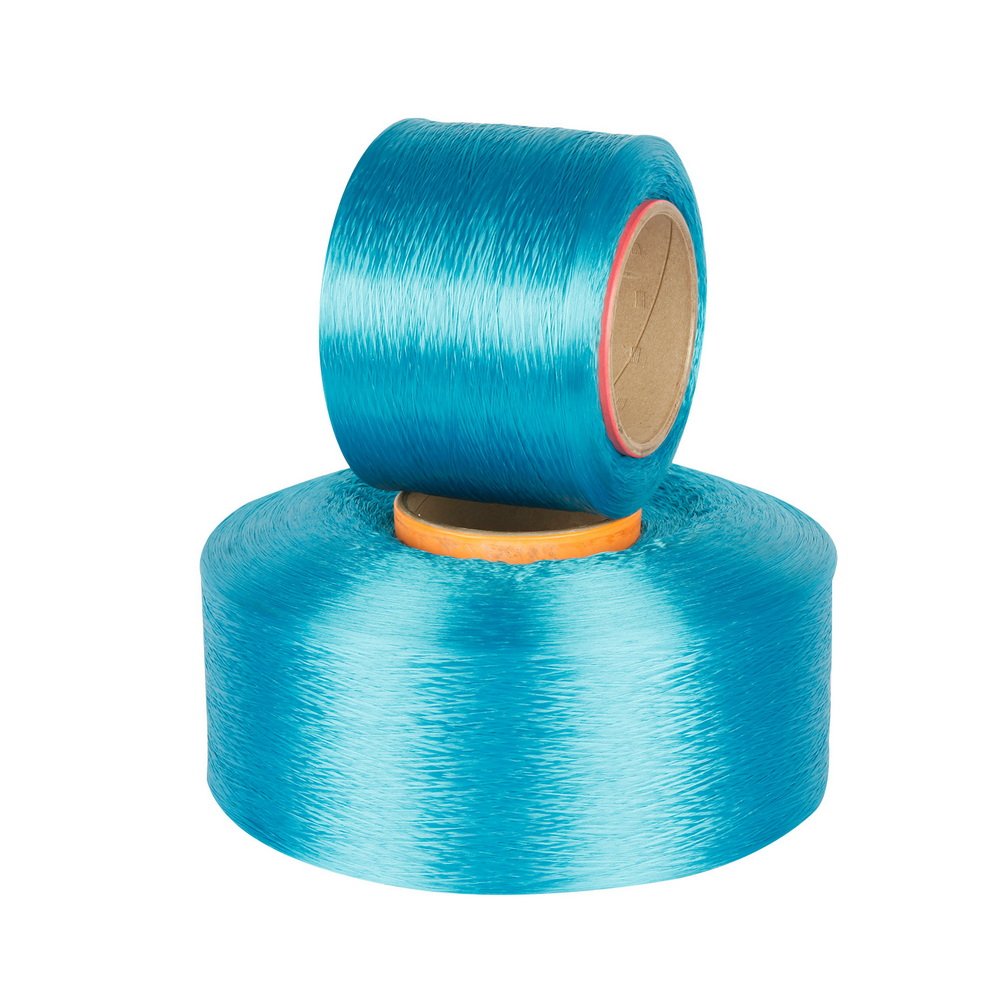
Yes, but polypropylene yarn is different from fibers such as polyester and nylon. Because polypropylene has very low moisture absorption, conventional dyeing after spinning is difficult.
For this reason, polypropylene yarn is commonly solution dyed during manufacturing.
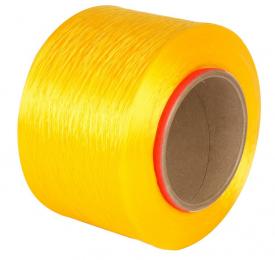
Solution dyeing means adding color pigments directly to the polymer before the yarn is spun.
The colored polymer is then extruded into filaments, so the color becomes an integral part of the fiber rather than simply coating its surface.
This method provides several advantages:
Excellent color consistency
Good color retention
High resistance to washing
Reduced water consumption during production
Solution-dyed polypropylene yarn is particularly useful when the finished textile needs stable and long-lasting color.
It is commonly selected for products such as carpets, floor coverings, outdoor textiles, and other colored technical fabrics.
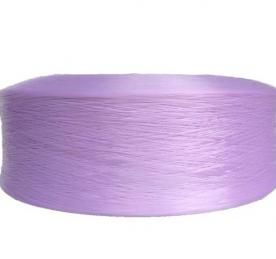
The production process can also support a wide range of standard and customized colors.
Yes. Buyers can normally specify a required color when ordering polypropylene yarn.
For custom colors, manufacturers may use color samples or recognized color systems such as Pantone references to match the customer's requirements.
Color consistency between production batches is also an important quality-control consideration.
For polypropylene applications where color durability is important, solution dyeing offers a major advantage because the pigment is incorporated into the polymer during fiber production.
However, the best coloring method depends on the final product, required color, and production process.
Polypropylene yarn can be produced in a wide range of colors, with solution dyeing being the standard approach for achieving durable and consistent coloration.
An experienced polypropylene yarn manufacturer can provide standard colors as well as customized color solutions for different textile applications.


 sales@cdfibre.com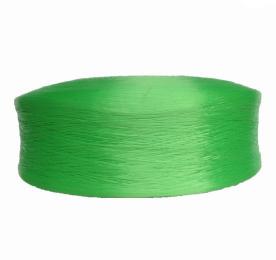



View More(Total0)Comment Lists