

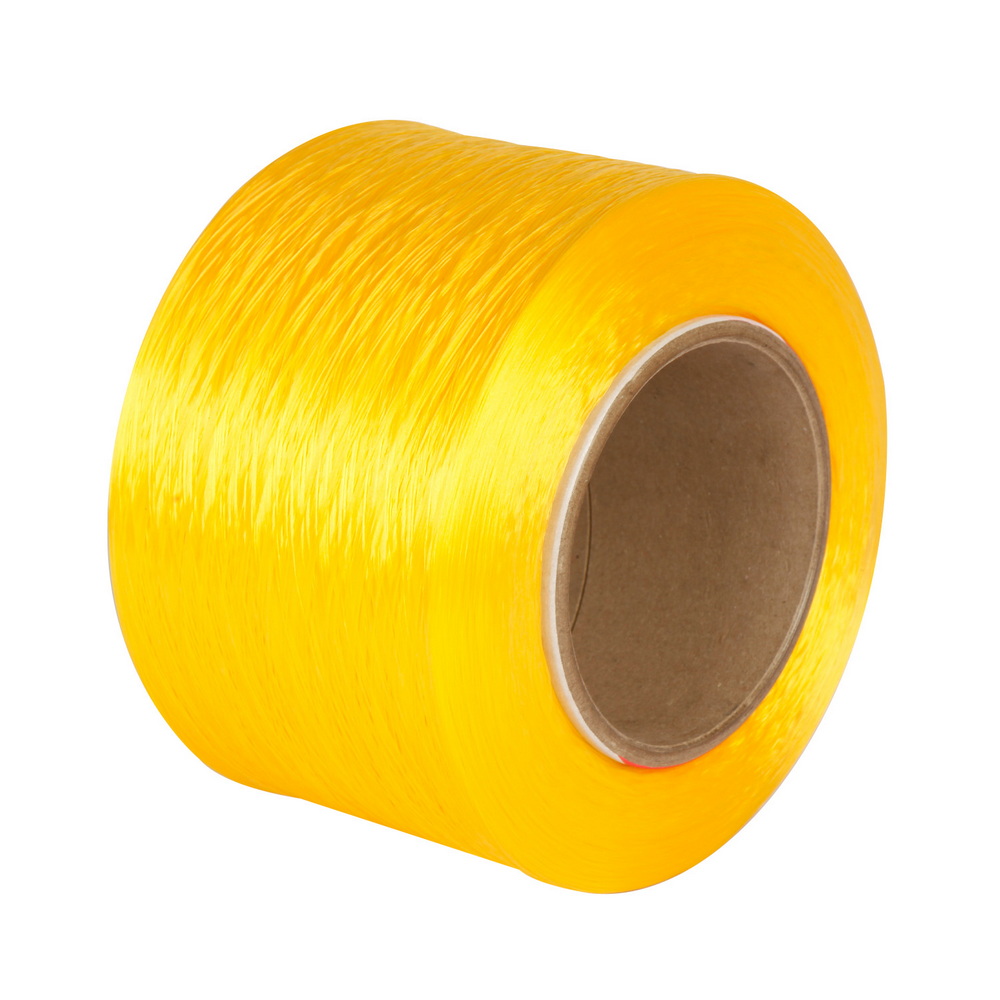
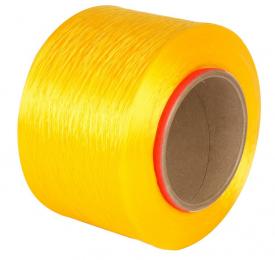
Polypropylene yarn, also known as PP yarn, is a lightweight synthetic fiber widely used in industrial applications such as webbing, ropes, shopping bag handles, and geotextiles.
Compared with many other synthetic fibers, polypropylene yarn offers an excellent balance of performance and cost. It is widely used in ropes, webbing, reusable shopping bag handles, geotextiles, agricultural fabrics, and other technical textile applications.
Polypropylene yarn is known for several practical advantages:
Lightweight: Polypropylene has a density of about 0.91 g/cm³, making it one of the lightest commercial textile fibers.
Moisture Resistant: It absorbs very little water, allowing products to dry quickly and perform well in humid environments.
Chemical Resistant: It has good resistance to many acids, alkalis, and chemicals commonly found in industrial applications.
Cost-Effective: PP yarn provides reliable performance while helping manufacturers control production costs.
These properties make polypropylene yarn suitable for products that require durability without adding unnecessary weight.
Different applications require different types of polypropylene yarn.
PP FDY Yarn (Fully Drawn Yarn) offers high strength and excellent dimensional stability. It is commonly used for shopping bag handles, industrial webbing, straps, and ropes.
PP ATY Yarn (Air Textured Yarn) has a softer, bulkier appearance and is suitable for products that require a textile-like feel.
PP BCF Yarn (Bulked Continuous Filament) is designed for applications such as carpets, mats, and other products that benefit from added bulk and resilience.
Because of its versatility, polypropylene yarn is used across many industries.
Some of the most common applications include:
Shopping bag handles and straps
Industrial webbing
Ropes and cords
Geotextiles
Agricultural nets
Technical textiles
Packaging products
Manufacturers often choose polypropylene yarn because it combines lightweight performance with long service life and consistent quality.
Polypropylene yarn is an excellent option when low weight, moisture resistance, and cost efficiency are important. It can also be produced in different deniers, colors, and performance grades to meet specific manufacturing requirements.
For industrial products such as reusable shopping bag handles, webbing, and ropes, selecting the right polypropylene yarn helps improve both product performance and production efficiency.
Polypropylene yarn is highly moisture resistant because it absorbs very little water. Although the yarn itself is hydrophobic, the water resistance of the final product also depends on its fabric structure and design.
No. Polypropylene yarn is a synthetic fiber made from polypropylene polymer, while cotton is a natural plant fiber.
Yes. Polypropylene is classified as plastic #5 (PP) and is technically recyclable where suitable recycling facilities are available.
Is polypropylene stronger than polyester?
Polypropylene yarn is lighter and highly moisture resistant, while polyester generally offers higher heat resistance and tensile strength. The better choice depends on the application.
Polypropylene yarn is a lightweight and durable synthetic yarn widely used in industrial textiles. Its combination of low weight, moisture resistance, chemical resistance, and cost-effectiveness makes it suitable for webbing, ropes, shopping bag handles, geotextiles, and many other applications. By choosing the appropriate type of PP yarn, manufacturers can achieve reliable performance for a wide range of industrial products.


 sales@cdfibre.com



View More(Total0)Comment Lists