

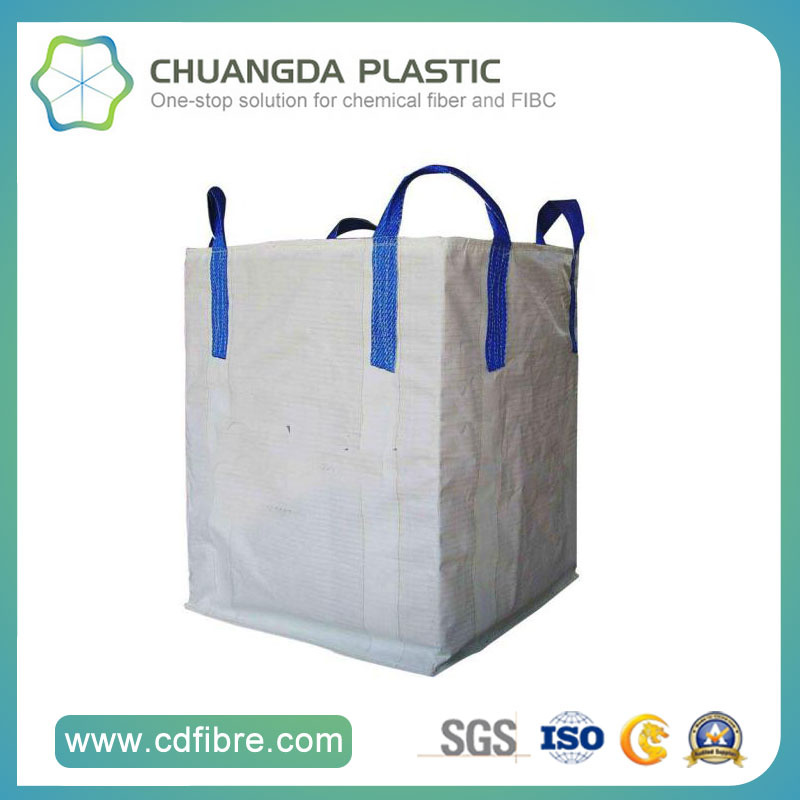
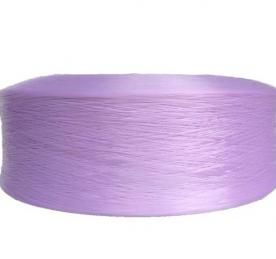
The performance of a FIBC bag depends not only on its design but also on the quality of the polypropylene yarn used in the woven fabric. Selecting the right yarn specifications is essential for ensuring safety, durability, and long-term performance.
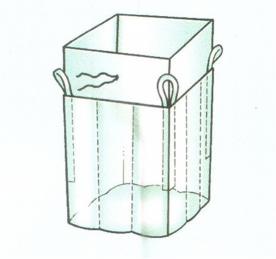
FIBC bags are designed to carry heavy loads, sometimes exceeding hundreds or even thousands of kilograms.
Therefore, the polypropylene yarn must provide sufficient tensile strength to support the required load capacity and maintain fabric integrity during handling and transportation.
Denier consistency directly affects fabric uniformity and weaving stability.
Yarn with stable denier helps manufacturers produce woven fabrics with predictable mechanical properties and a consistent appearance.
Controlled elongation helps prevent excessive stretching under load.
For FIBC applications, dimensional stability is important for maintaining bag shape and ensuring safe handling during filling, stacking, and transport.
Many bulk bags are stored outdoors before use or during transportation.
UV-stabilized polypropylene yarn can help reduce degradation caused by prolonged sunlight exposure, improving the service life of the bag.
Consistent color and batch quality are important for manufacturers producing large volumes of FIBC fabrics.
Reliable yarn quality helps reduce production interruptions and supports consistent finished products.
When sourcing polypropylene yarn for FIBC production, buyers should evaluate:
Production capacity
Quality control systems
Testing capabilities
Customization options
Supply stability
A reliable supplier can help ensure consistent yarn performance across long-term projects.
High-quality FIBC bags start with high-quality polypropylene yarn. Factors such as tensile strength, denier consistency, UV resistance, and production stability all play important roles in achieving reliable bulk packaging performance.


 sales@cdfibre.com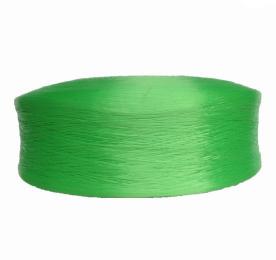



View More(Total0)Comment Lists