

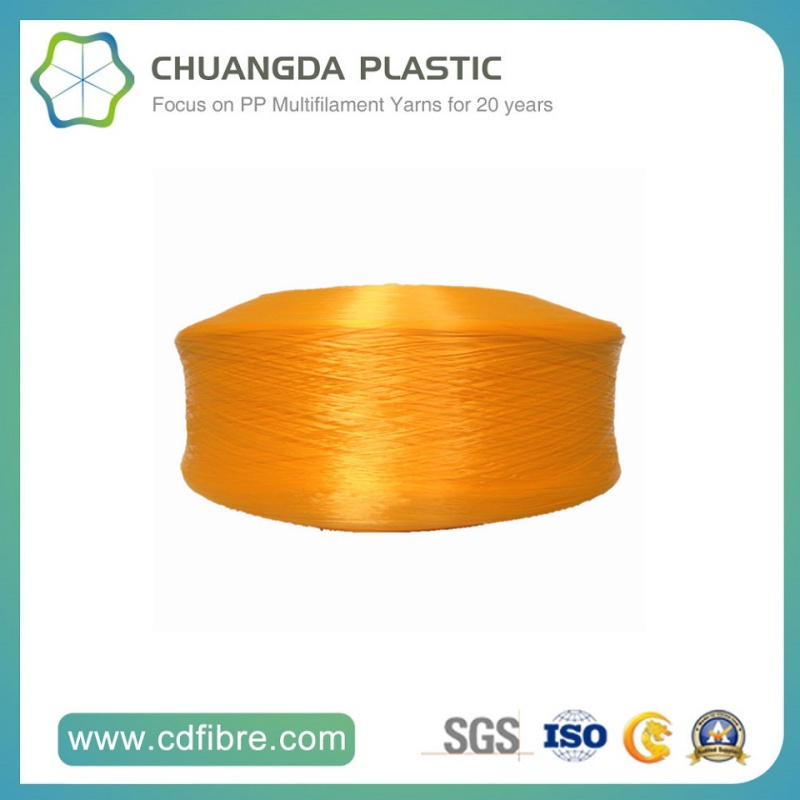
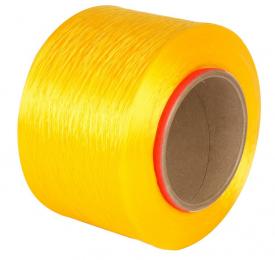
Intermingled polypropylene yarn is a continuous filament yarn in which individual filaments are lightly entangled at regular intervals using compressed air. Unlike twisted yarn, intermingling does not add conventional twist. Instead, it improves filament cohesion and helps the yarn maintain a more stable structure during downstream processing.
During production, multiple continuous filaments pass through an air-jet device. Compressed air creates localized entanglement points between the filaments.
These interlacing points help hold the filaments together without significantly changing the basic characteristics of the yarn.
For PP yarn manufacturers, the intermingling level can be adjusted according to the requirements of the final application and processing equipment.
The main purpose of intermingling is to improve yarn handling and filament cohesion.
Intermingled PP yarn can offer:
Better filament cohesion
More stable yarn structure
Improved handling during weaving or other processing
Reduced filament separation
Better suitability for continuous processing
The appropriate intermingling level depends on the yarn construction and the customer's production process. Too little intermingling may provide insufficient cohesion, while excessive intermingling may affect the yarn's appearance or processing behavior.
Intermingling and twisting are not the same process.
Intermingling uses compressed air to create localized filament entanglements, while twisting rotates the yarn to create a continuous twist structure.
The choice depends on the required yarn structure, processing method, and end-use requirements.
When purchasing intermingled polypropylene yarn, buyers should provide key specifications such as:
Yarn type
Denier
Filament count
Color
Intermingling requirement
Required strength and elongation
Packaging
Intended application
A professional PP Yarn Manufacturer can adjust the yarn structure according to the customer's downstream processing requirements.
Intermingled polypropylene yarn provides improved filament cohesion without relying on conventional twist. It is a practical option when stable yarn handling and filament integrity are important.
For B2B buyers, selecting the right intermingling level is just as important as choosing the correct denier and yarn construction.


 sales@cdfibre.com



View More(Total0)Comment Lists